“Send me a price for rice” is the start of a conversation, not the end of one. Indian rice spans a premium aromatic tier and a large value tier, and the right choice depends on who your customer is and what they cook. Here is how to specify it without surprises.
Basmati: aroma, length and ageing
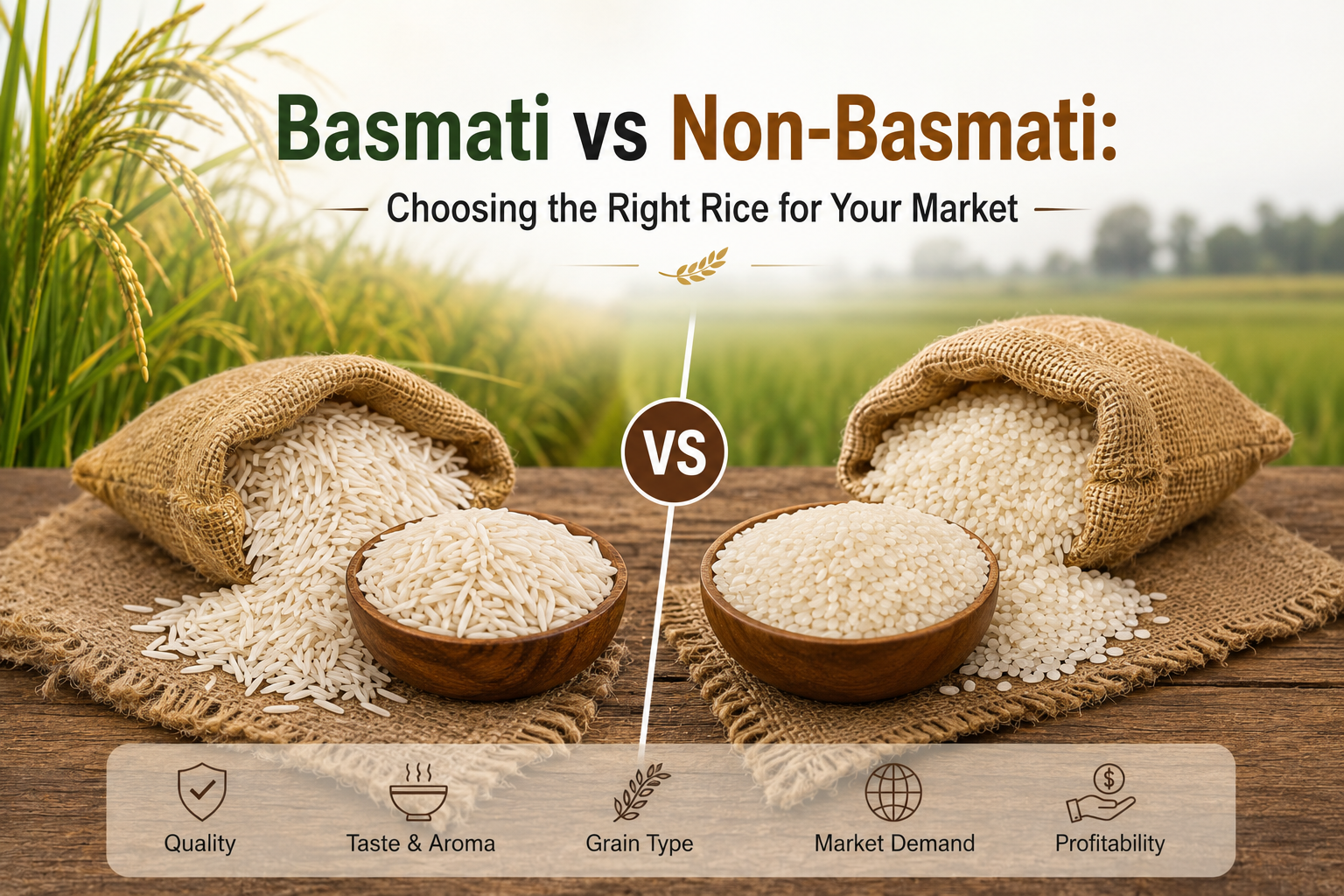
Basmati is defined by its extra-long, slender grain (averaging roughly 7.5-8.2 mm), natural aroma and high elongation when cooked. Ageing matters: aged basmati cooks fluffier with more separate grains, which is why premium buyers pay for it. You will also choose a milling style, raw, steamed or golden sella (parboiled), each giving a different colour and cooked texture.
Non-basmati: value and volume
For catering, institutional supply and price-led retail, non-basmati grades such as Sona Masoori, IR-64 and Swarna do the job at a much better landed cost. The key spec here is the broken percentage, commonly 5% or 25%, and whether you want white or parboiled milling.
The two numbers that decide a rice contract are grain length and broken percentage. Nail those and the rest follows.
Sortex, moisture and packaging
Whatever the tier, sortex cleaning removes discoloured grains and foreign matter, and moisture must sit in the safe range for the voyage. Packaging runs from 1 and 5 kg retail packs to 25 and 50 kg sacks and bulk, in PP, jute, BOPP or non-woven bags, often with private-label printing for retail clients.
Matching rice to the destination
Gulf and European premium retail lean basmati; African and South-East Asian volume markets often run non-basmati. We will sample to your exact spec before you commit, so the container matches the cook-test you approved.
Frequently asked questions
What is the difference between basmati and non-basmati rice?
Can you supply parboiled and private-label rice?
How is rice quality verified before shipment?
Sourcing Rice?
Talk to our team for current grades, packing and availability.