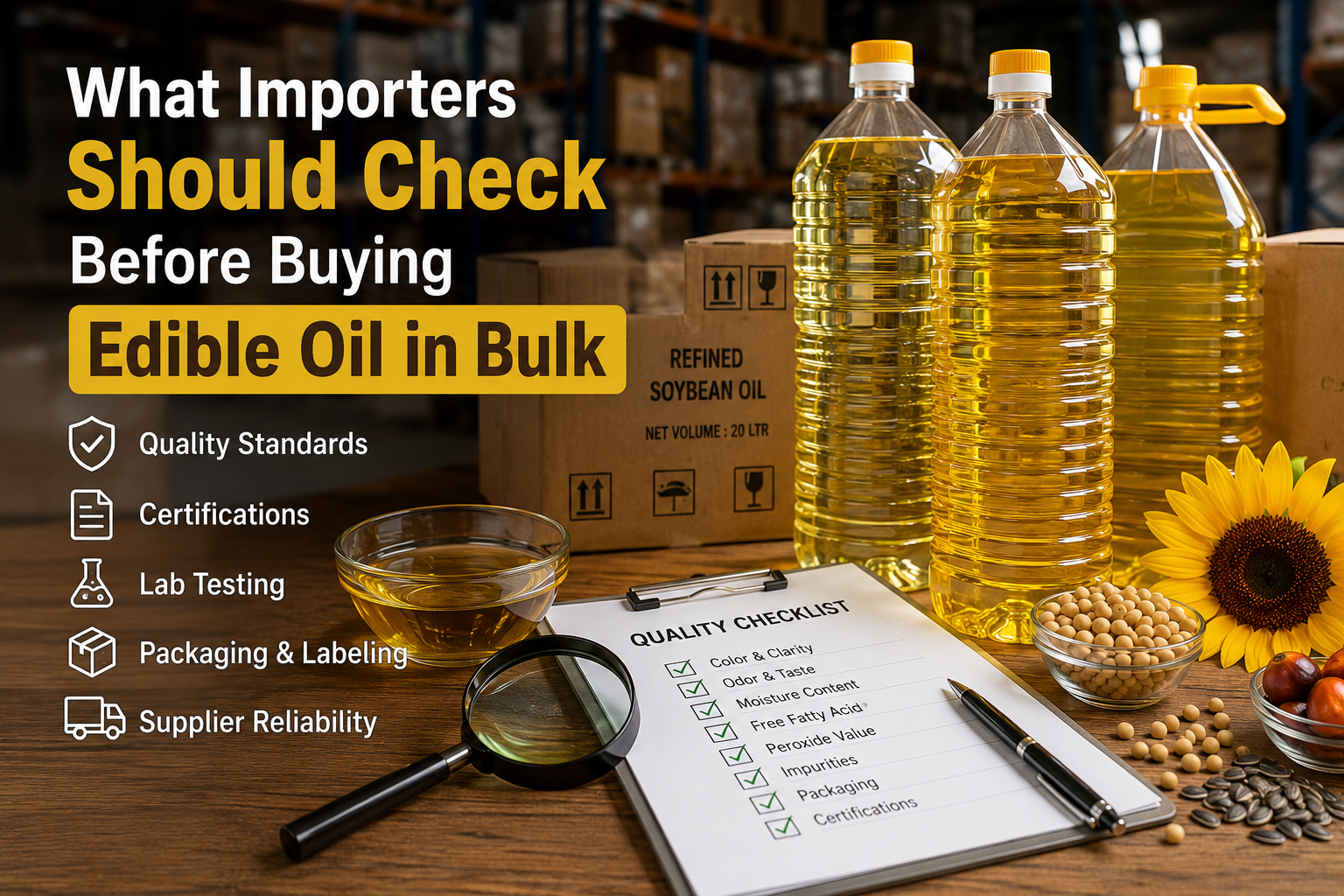
Edible oil is a high-volume, low-margin trade, which means quality and packaging mistakes are expensive. Before you confirm a bulk order, walk this short checklist with your supplier.
1. Refining grade and free fatty acid (FFA)
For refined oils, ask for the refining grade (RBD, refined, bleached, deodorised) and the FFA value. Low FFA signals fresh, well-processed oil; a high figure points to rancidity risk over the voyage. Colour and smell should match the type, light and neutral for sunflower and soybean, characteristic aroma for groundnut and mustard.
2. Packaging that survives the journey
Retail formats run 1, 5 and 15 litre jerry cans; bulk moves in 200 litre drums or flexitank. The right choice depends on volume and whether you are repacking. Seal integrity and food-grade liners are non-negotiable, a leaked drum contaminates a stack.
Most edible-oil claims are not about the oil. They are about the can, the seal and the paperwork.
3. Documentation and standards
Insist on documents that match the contract: specification sheet, FSSAI-aligned quality, certificate of origin and shipping paperwork. For some destinations you may also need health certificates. Confirm these before loading, not after.
4. Type fit for the market
Sunflower and soybean suit neutral, everyday cooking; groundnut and mustard serve South Asian and ethnic retail where aroma is the selling point. We can quote retail and bulk together so you balance shelf appeal against landed cost.
Frequently asked questions
What packaging is available for edible oil exports?
Which edible oils do you export?
What quality documents come with an oil shipment?
Sourcing Edible Oils?
Talk to our team for current grades, packing and availability.